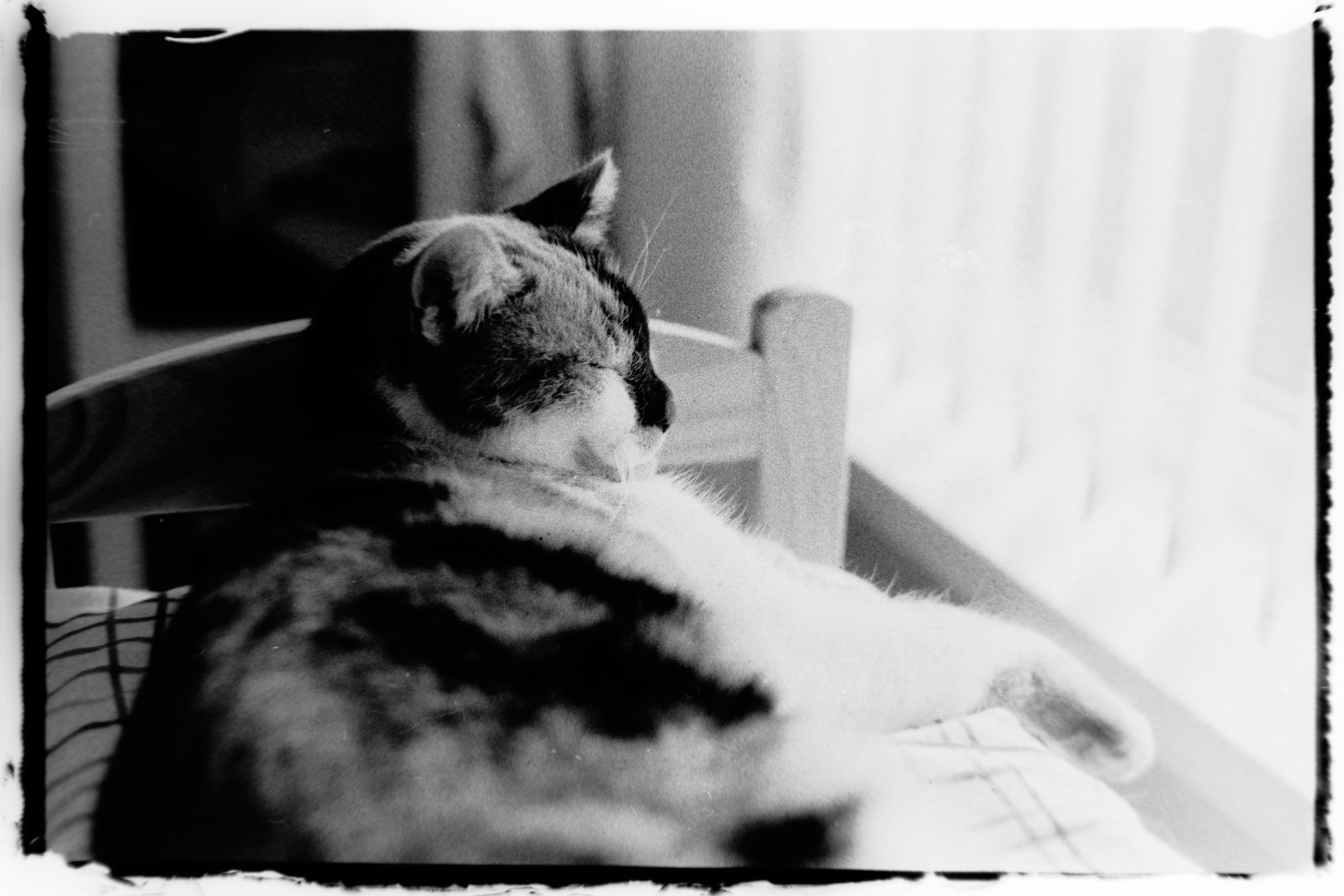
I have had an interest in film photography for years now, I love the idea of it, the process of it, and the perfectly imperfect results. However, the cost and impracticality are what have always held me back; I have previously bought cameras with the intention but then never carried through. This time, though, I decided it was time; I would buy everything and give it a proper go.
In prior research, I had found my ideal camera, the Minolta X-300.

It is a beautiful and simple camera from the 80’s, while it is electronic and has a built-in light meter, it is mostly fully manual.
The most important thing, though, is that they are plentiful and can be picked up for basically nothing. Especially if you pick one up listed as broken with one of a couple of very common and very fixable faults.
The main issue seen with these cameras is that the shutter locks up and it can’t be wound on or fired. Generally, this has one of two causes; the most common is that a single capacitor has died and needs replacing, the second is that two gears part of the shutter mechanism have got out of sync. Both only require the bottom plate to be removed to resolve, and can be fixed in just a few minutes.
After sorting a camera, the main expense and part that took the most research before starting was the developing process. There are so many different chemicals and differing opinions on how best to process. In the end, I settled on some Ilford Id11 developer and Ilford Rapid fixer, forgoing the specific stop bath chemicals for a tap water rinse, and the wetting agent for a distilled water rinse.
For the dev tank, I bought a used Paterson System 4, not realising this was a vintage item and different from the current Super System 4.
For processing the negatives, while I would love to be able to set up a proper dark room and play with creating prints with an enlarger and no digitisation, I simply do not have the space to try.
The much more compact solution is a 3d printed Jig to scan the photos using my X-T2 and some macro tubes with one of my Samyang primes.
After receiving everything and reading all the various cancer warnings and processing instructions, I gave it a go at developing my first ever roll of film.
I had plenty of issues loading the film onto the developer tanks spool within a restrictive, very sweaty dark bag, which led to some scratches and uneven development on some of the frames. The scanning also encountered some issues with alignment and requires some other adjustments, but honestly, after seeing the end result, I am quite happy with how it went. It could have come out considerably worse, and I now know what I need to alter for next time to improve the process and results.
This is not something I will do frequently, but it is something different that I will enjoy doing occasionally.


Leave a Reply