Its fast, its soft and its cheap.
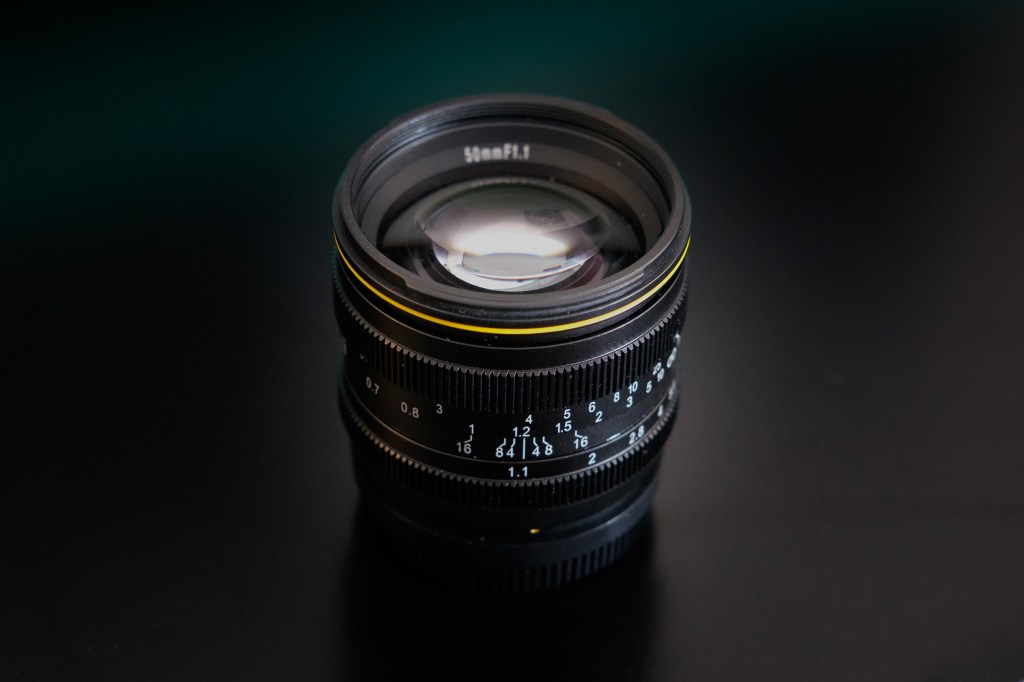
As I am writing we are in black “Friday” week 2019 and as you may have just guessed that means that I very recently picked up the Kamlan 50mm rather cheap. We will however gloss over the fact that I was under the impression that I was purchasing a mk2 variant not the mk1 that was shipped. The sample bought was for the fujifilm X mount to be used on my trusty X-T1 but the lens also is available in MFT and other crop mirror less mounts.

Appearance and construction
I am going to kick this review off by stating just how beautiful I think this lens physical design is. The design of this lens comes across as simple and understated with a splash of colour and flair that is just enough to help it to stand out from the crowd without being garish.
Physically the lens has a hefty and solid feeling full metal construction, it is provided with an acceptable plastic lens hood that will if nothing else do a good job of protecting the large front element.
The aperture ring is placed at the bottom of the lens closest to the camera body and the focus ring is placed above that towards the front of the lens, this is the same layout used by Fuji X lenses and the majority of vintage manual focus lenses. When using the aperture ring you will notice that it is click less which may or may not be to your taste however it has a strong yet smooth resistance to it which means that you are unlikely to move it accidentally when adjusting focus.
Speaking of the focus ring, it has slightly less resistance than the aperture ring and much to my delight has a very long throw, taking a half turn of the ring to move from closest focus to infinity. The longer throw means that it is easier to focus at f1.1 thanks to increased granularity but we will come back to that later.

Exposure
The first tests that I did with this lens before taking it out for a shooting session were side by side comparisons against other lenses in a controlled scene. The lenses used were as follows:
Ricoh 50mm f2(adapted to Fx)
Fujifilm 35mm F2
What became immediately apparent was that the light transmission of this lens is good wide open but it isn’t perfect, in fact it appears to perform better relatively when stopped down slightly.
Put simply when comparing the exposure in auto and manual mode against the other lenses listed the Kamlan was providing the equivalent exposure of f2 on the other lenses at f2.8 marked on the lens. These observations are based on relative performance against the 2 other sample lenses which provided the same exposure at f2. I gauged using the one-third-stop f-number scale.
As an example of the numbers observed, at a static iso 200 at f2 the camera’s meter provides a shutter speed of 1/125 on the 2 other lenses. On the kamlan however at f1.1 it meters at 1/250 which is 1 stop faster than the other lenses at f2 or the equivalent of f1.4 going by the standard scale if we assume the other samples t-stop is very close to their f-stop rating.
As we stop down the kamlan seems to perform better in regards to light transmission, to achieve a shutter speed of 1/125 the aperture has to be set to f2.8 and when the aperture is marked at f2 it meters at 1/210.
I will concede that these are not lab perfect conditions and this is not the most scientific of measuring methodologies but they are as controlled as i can reasonably get them and gives a reasonable idea to someone interested in this lens purely for low light use.
Image quality
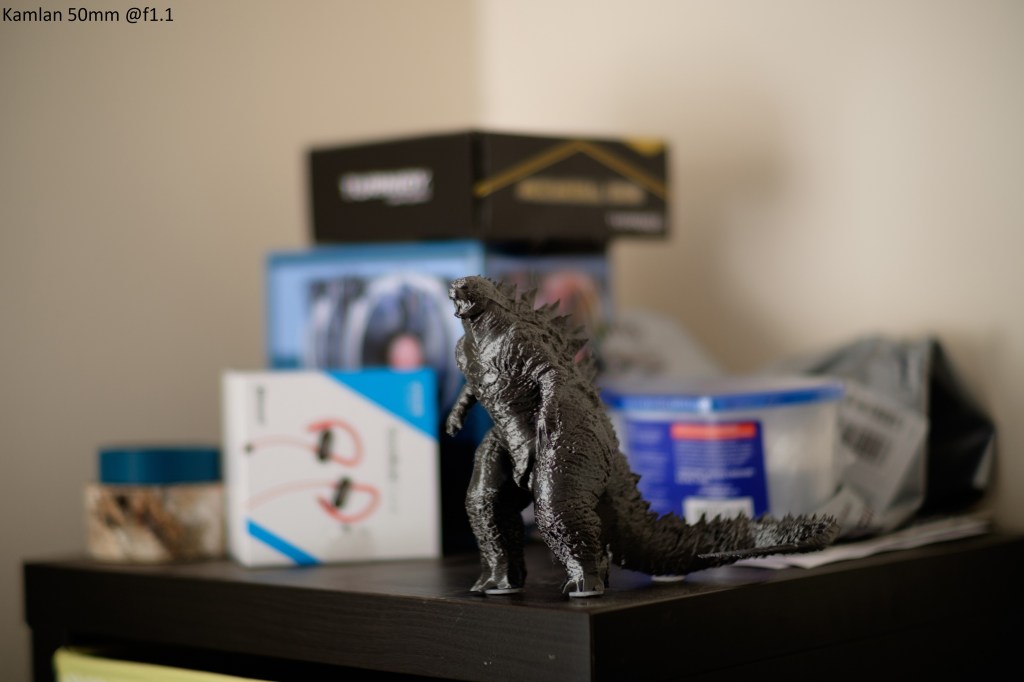
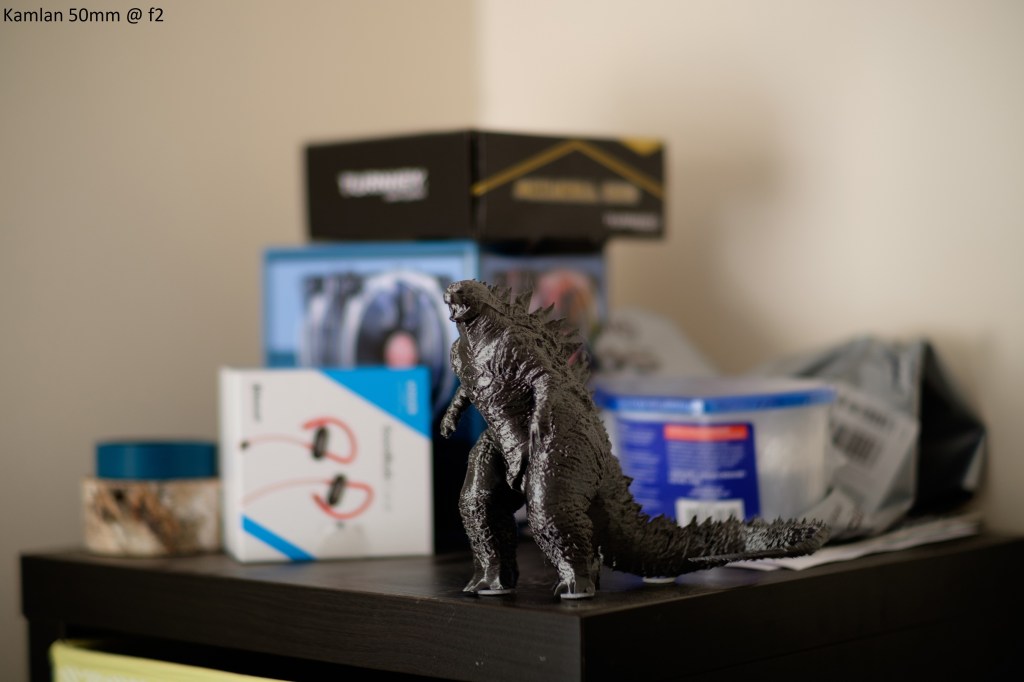
The first thing that I have to say on this len’s IQ is that oh boy its soft, wide open its soft as cheese. The edge sharpness is atrocious, if anything towards the edges of the frame is even close to been in focus it is very noticeable that they are blurred and distorted as compared to the centre of the frame. Even peak sharpness in the centre is not ideal, this is not helped by the the fact that the DOF at f1.1 is tiny and so getting the correct area within focus is a challenge but one that is made easier by the amount of travel the focus ring has.

On this lens vignetting isn’t well controlled, its there and in situations with a plain bright backdrop it is extremely obvious and detracts from the image but in certain portrait situations i wouldn’t say that its really noticeable or bad and saves adding a slight amount in post anyway.
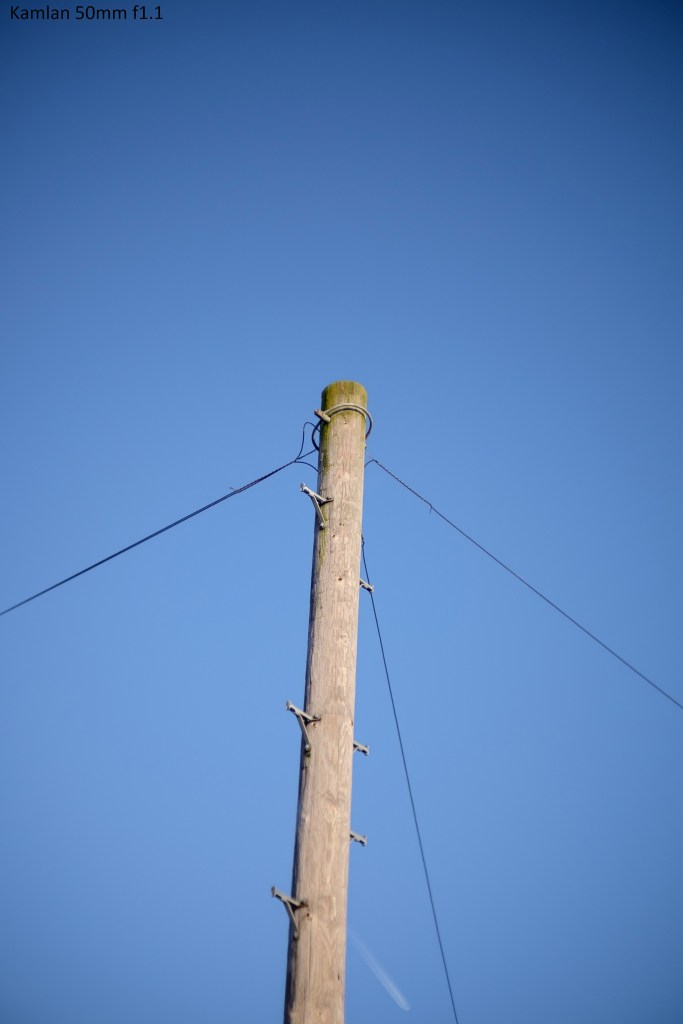

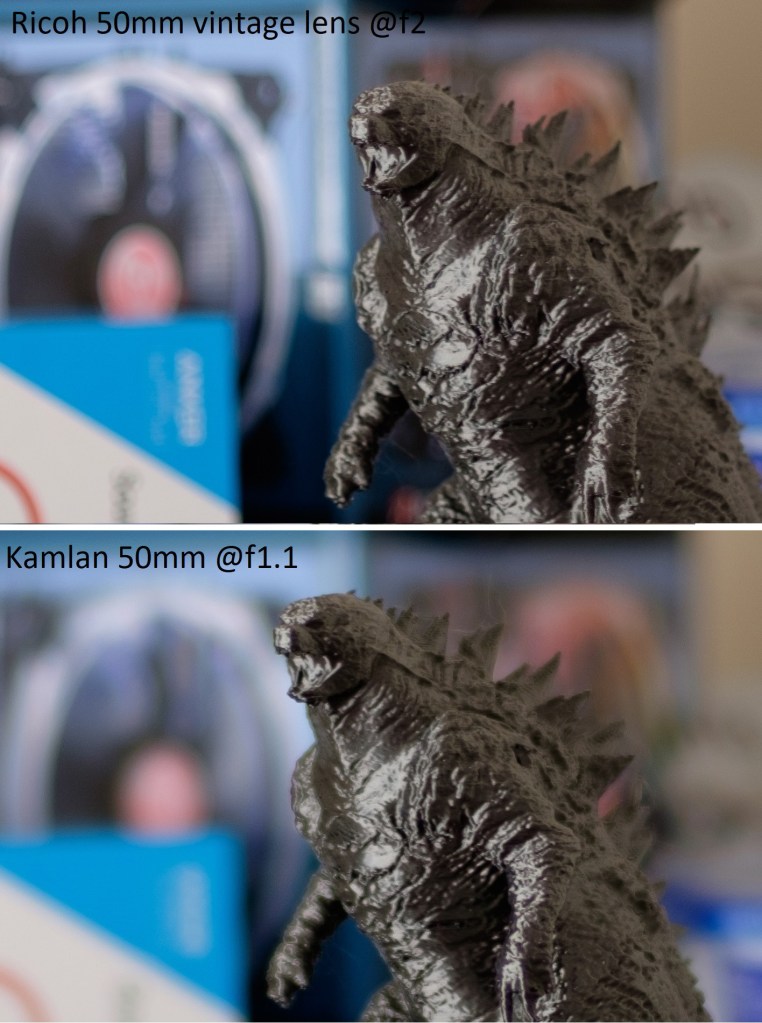
When comparing its performance to a vintage 50mm lens its centre performance isn’t a million miles away, at the same f-stop the sharpness and contrast are similar however at f1.1 chromatic aberration, contrast and sharpness all worsen slightly.
I have seen other reviews talking about the stopped down performance and how it does improve and as well as testing it on landscapes and scenes where edge performance is required but even stopped down the edges of the frame stay pretty distorted. Lets be honest if you are buying an f1.1 lens your not buying it to use stopped down and probably not for use in scenarios where the edge of the frame is a focus, realistically you will have other lenses for that purpose and if not you probably don’t want this as your only lens as there are better all round options for the same price or less.
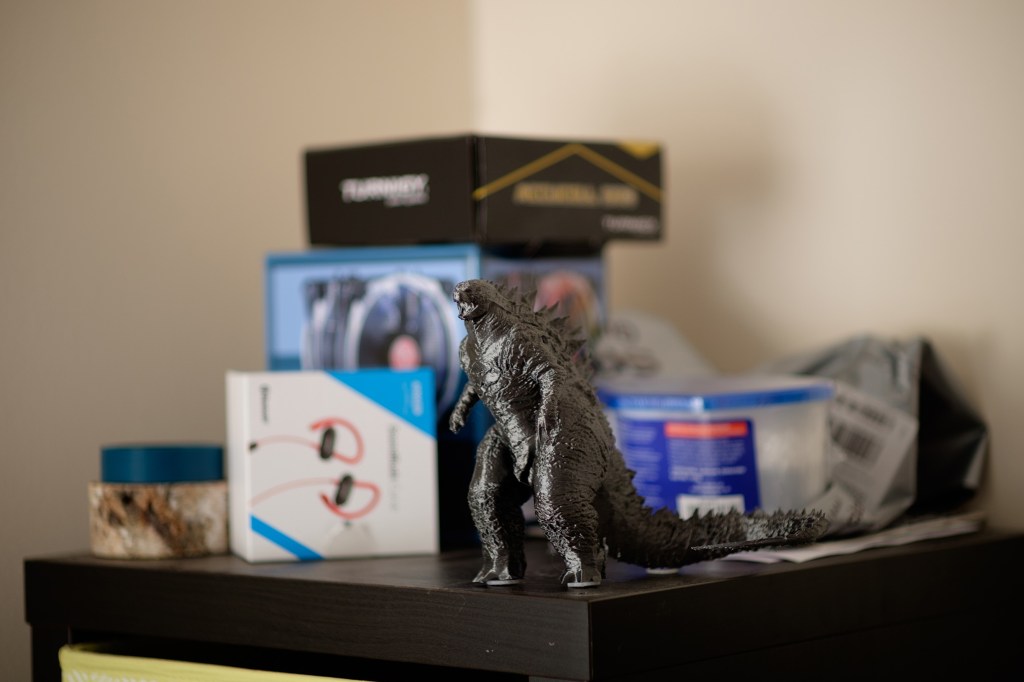
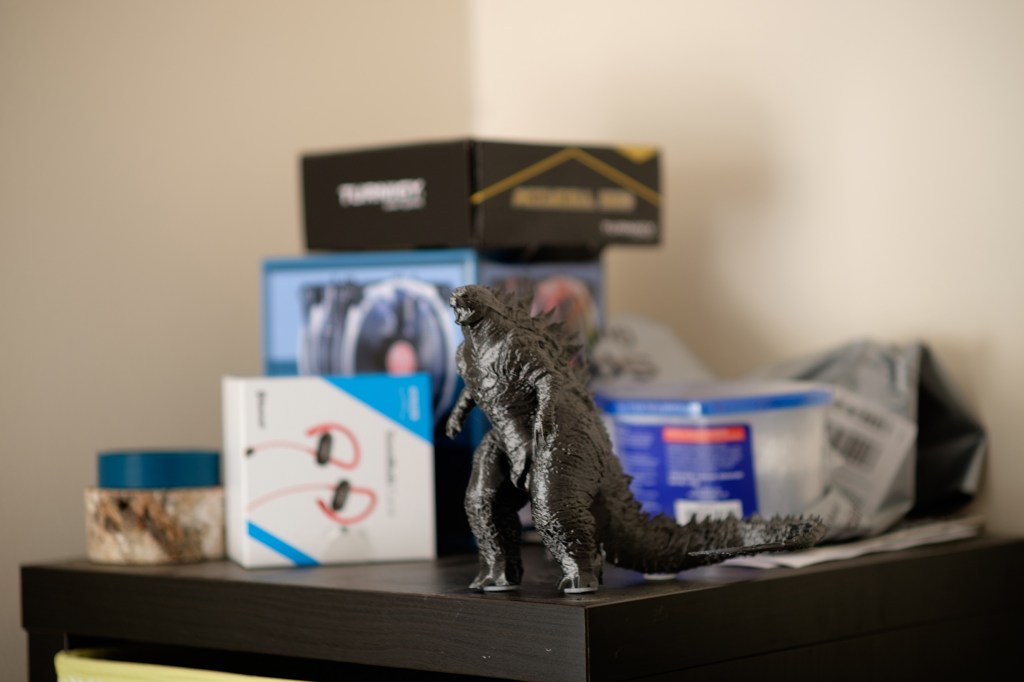
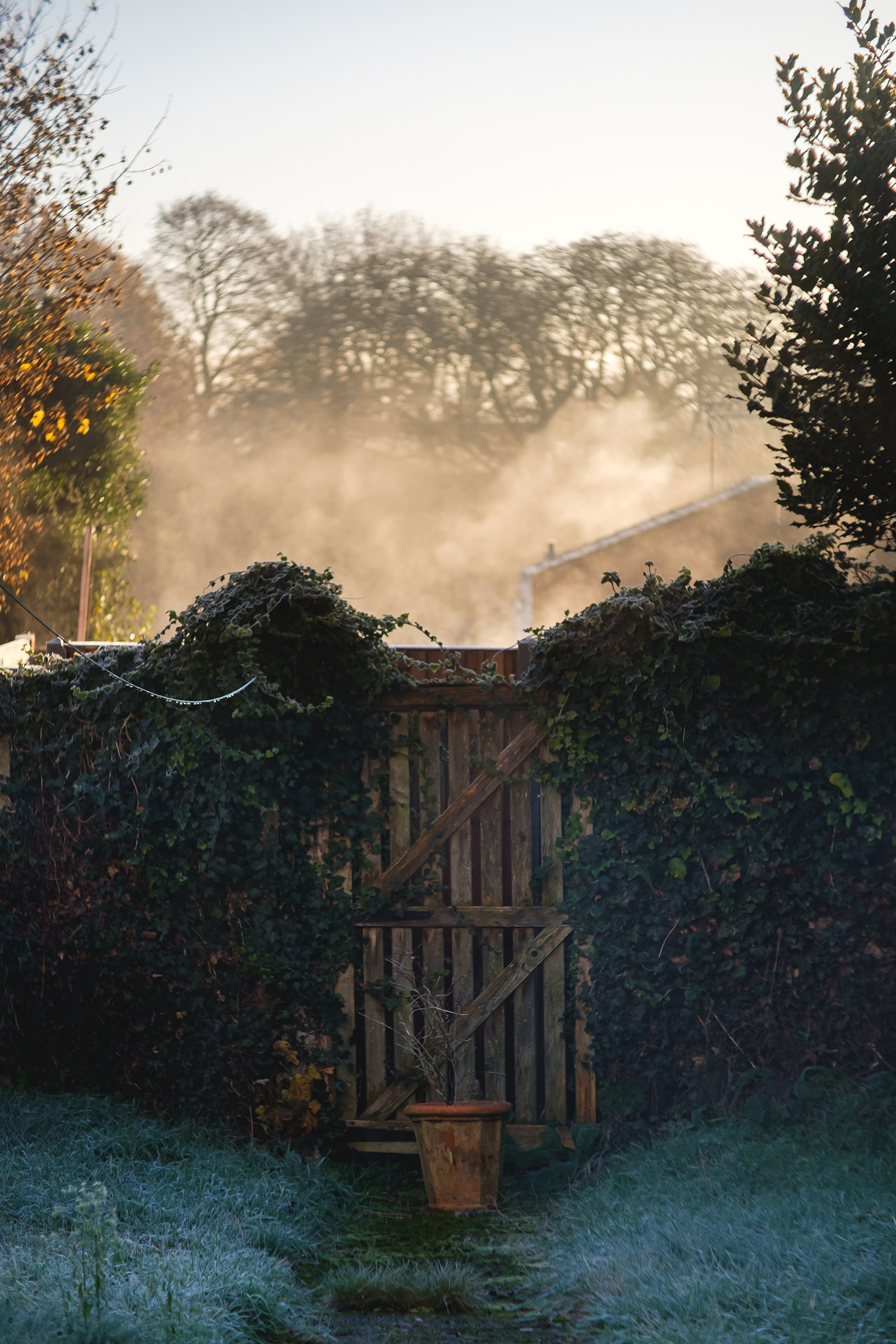
If you are still reading this then you are clearly after the most BOKEH you can get for your £ and on that front this lens delivers. You wont find more in this price range, if used for portraits the images it produces have punch and a pleasing soft look to them but its probably best used for smaller viewing formats like Instagram. Personally i am not sure how it will look when blown up and printed out but if you do then the smaller the better. For more sample images scroll down to the bottom.


Conclusion
I am going to keep the conclusion to this review short and simple.
The kamlan 50mm f1.1 mk1 is a solidly built and fun lens that provides soft portraits with a good amount of pop and performs very well in low light.
If you are on a budget and want either the very shallow depth of field or the low light performance that this lens provides then it is the lens for you. However if you have more money to spend or have other priorities such as chasing peak sharpness then maybe look elsewhere.
Thanks for reading



 Attempting Art
Leave a comment